
MAJESTY WOODWORKS / FEATURED BUILD
Walnut Trestle Table
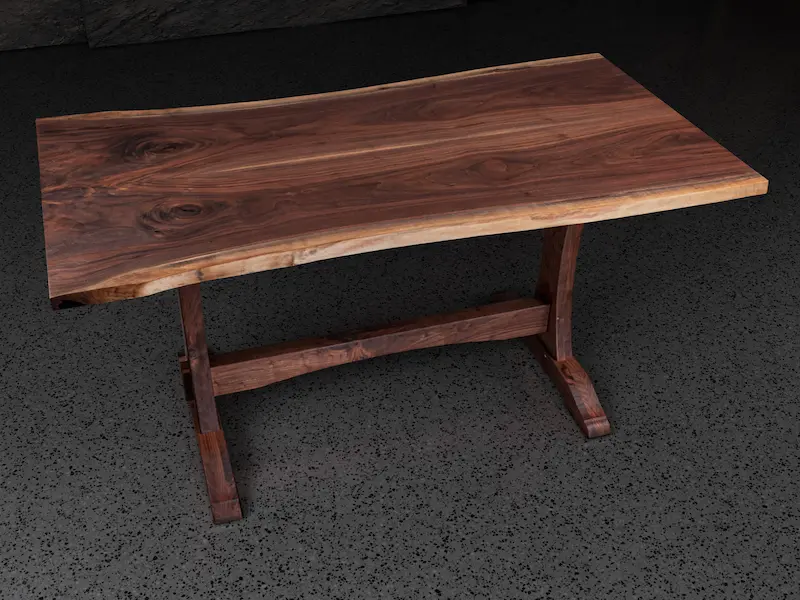
Two bookmatched walnut slabs form the live-edge top. Below, hand-shaped curves soften the trestle base, while drawbored joints and removable bubinga wedges hold everything together. This counter-height walnut trestle table brings traditional joinery into a design made for everyday dining.
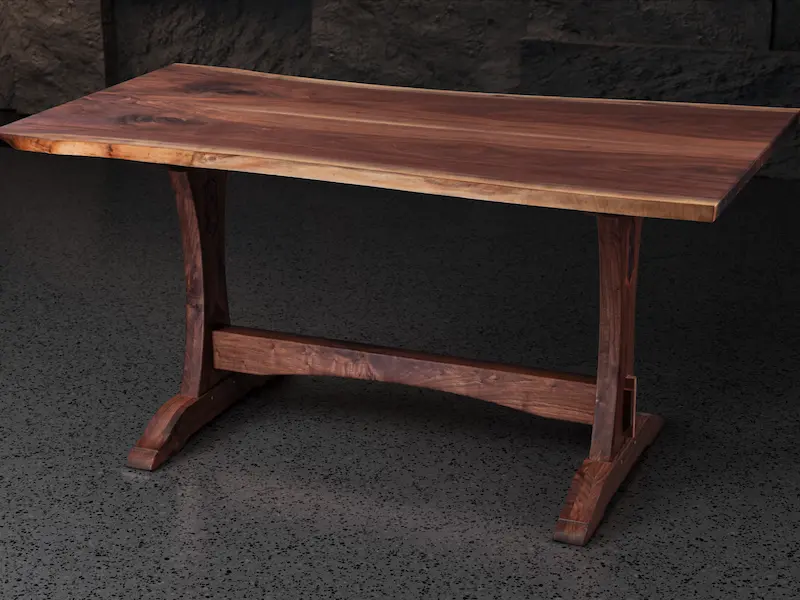
LENGTH
73 in
LIVE-EDGE WIDTH
34¼–37½ in
HEIGHT
35¾ in · counter height
FINISH
Danish oil + satin conversion varnish
01/THE TOP
Bookmatched walnut, live edges intact
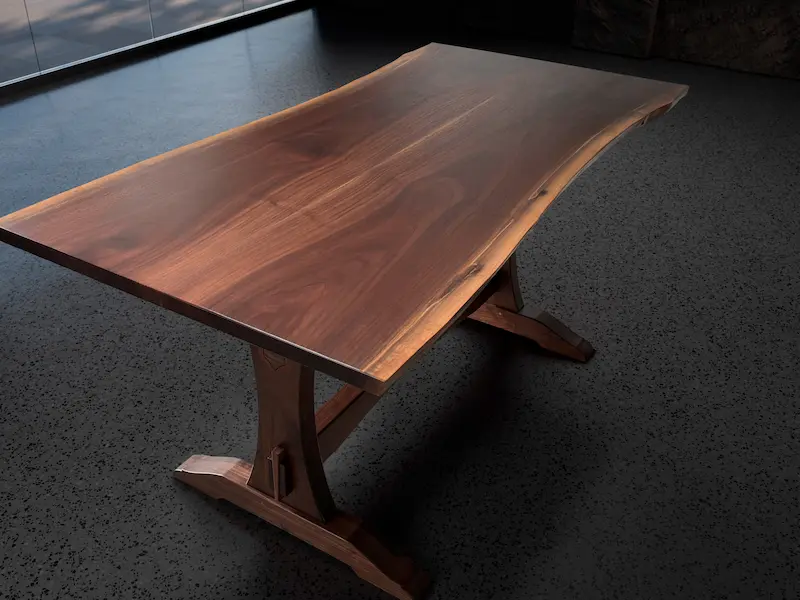
A bookmatched pair of walnut slabs makes up the tabletop. Once opened, the pair reveals mirrored grain across the center. The inner edges were jointed and glued to form a single top, while both outside live edges remain intact.
The top measures 73 inches long and 1½ inches thick. Because the edges follow the original shape of the wood, the width varies from 34¼ to 37½ inches. Straight, squared ends give those natural curves a clean finish.
02/THE BASE
Curves drawn by hand
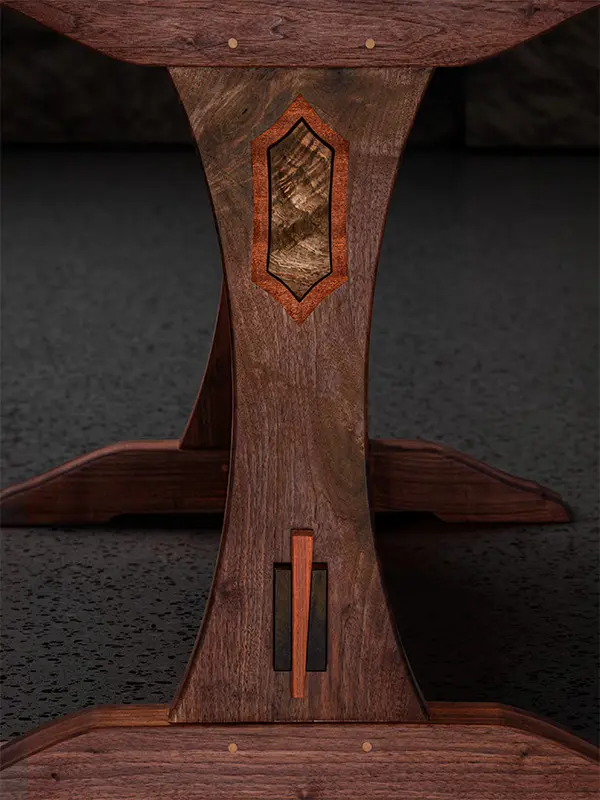
The base consists of two shaped walnut leg assemblies joined by a long stretcher. Each upright narrows through the middle and widens toward its foot and upper support. Both the feet and upper supports have curved profiles, giving the table its distinctive outline without adding unnecessary bulk.
The feet span 32 inches. The uprights are 2¼ inches thick, while the feet and upper supports are 3¼ inches thick. Their different proportions become more apparent in the full-leg view: the broad horizontal members meet a narrower, sculpted upright, with the stretcher connecting the two assemblies.
All three profiles were drawn by hand. The shaped members connect through mortise-and-tenon joints, while the tall uprights provide room for the double inlays and drawbored maple dowels. Lower down, the removable bubinga dovetail keys remain visible where the stretcher passes through each leg. The ornamental and structural details share the same assembly, but each has a specific job.
03/THE DETAILS
Figured walnut, sapele, and maple
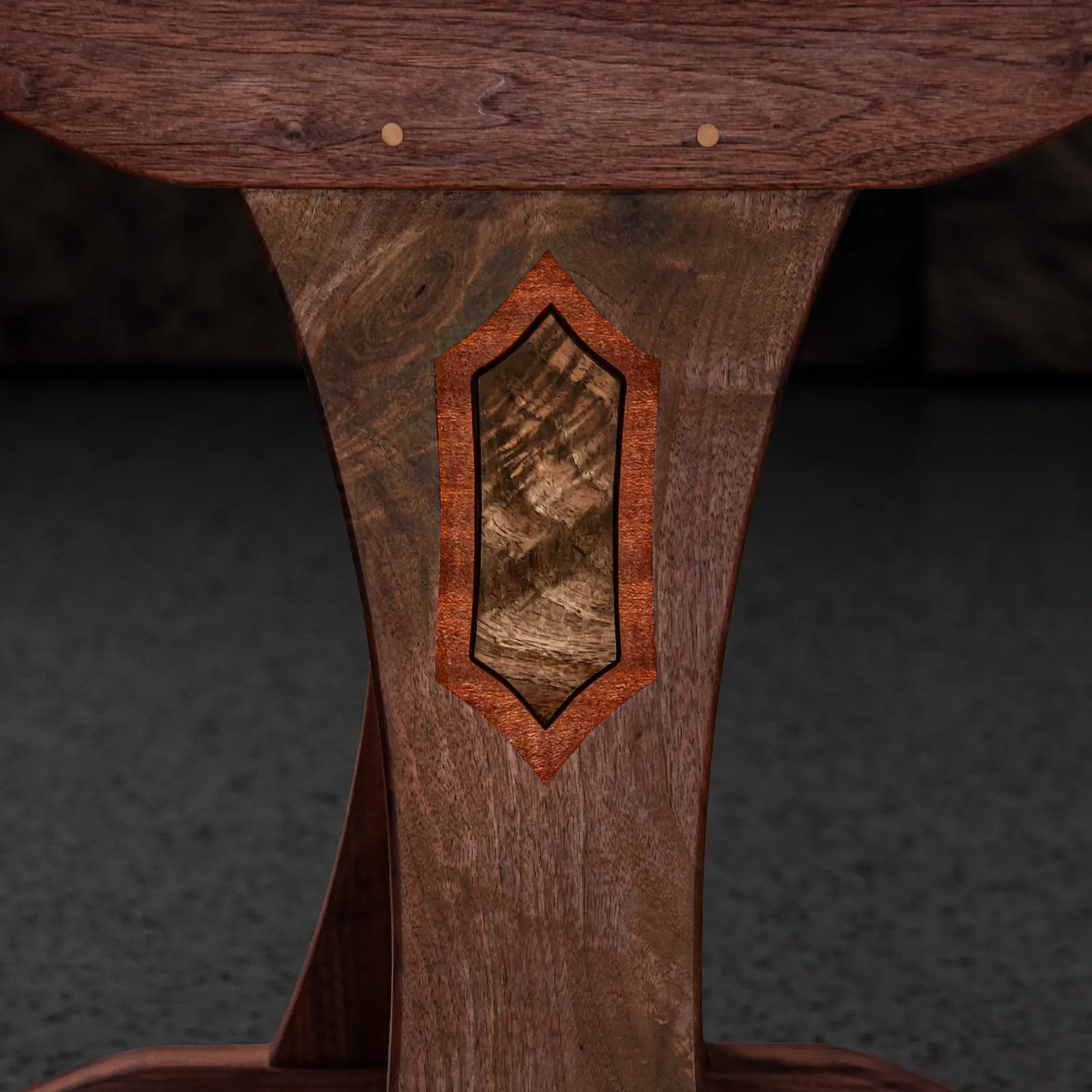
Double inlays. Highly figured walnut fills the center of each curved shape, with sapele forming the contrasting border. The design follows the lines of the legs instead of adding a separate pattern that competes with them. Up close, the figured grain gives the inlays as much character as their shape.
Drawbored mortise-and-tenon joints. The legs join their feet and upper supports with glued mortise-and-tenon joints. Slightly offset holes guide maple dowels through the tenons. As each dowel goes in, it draws the shoulders of the joint tightly together. The dowels are small details, but they do important structural work.
04/THE JOINERY
A Nakashima-inspired dovetail tusk tenon
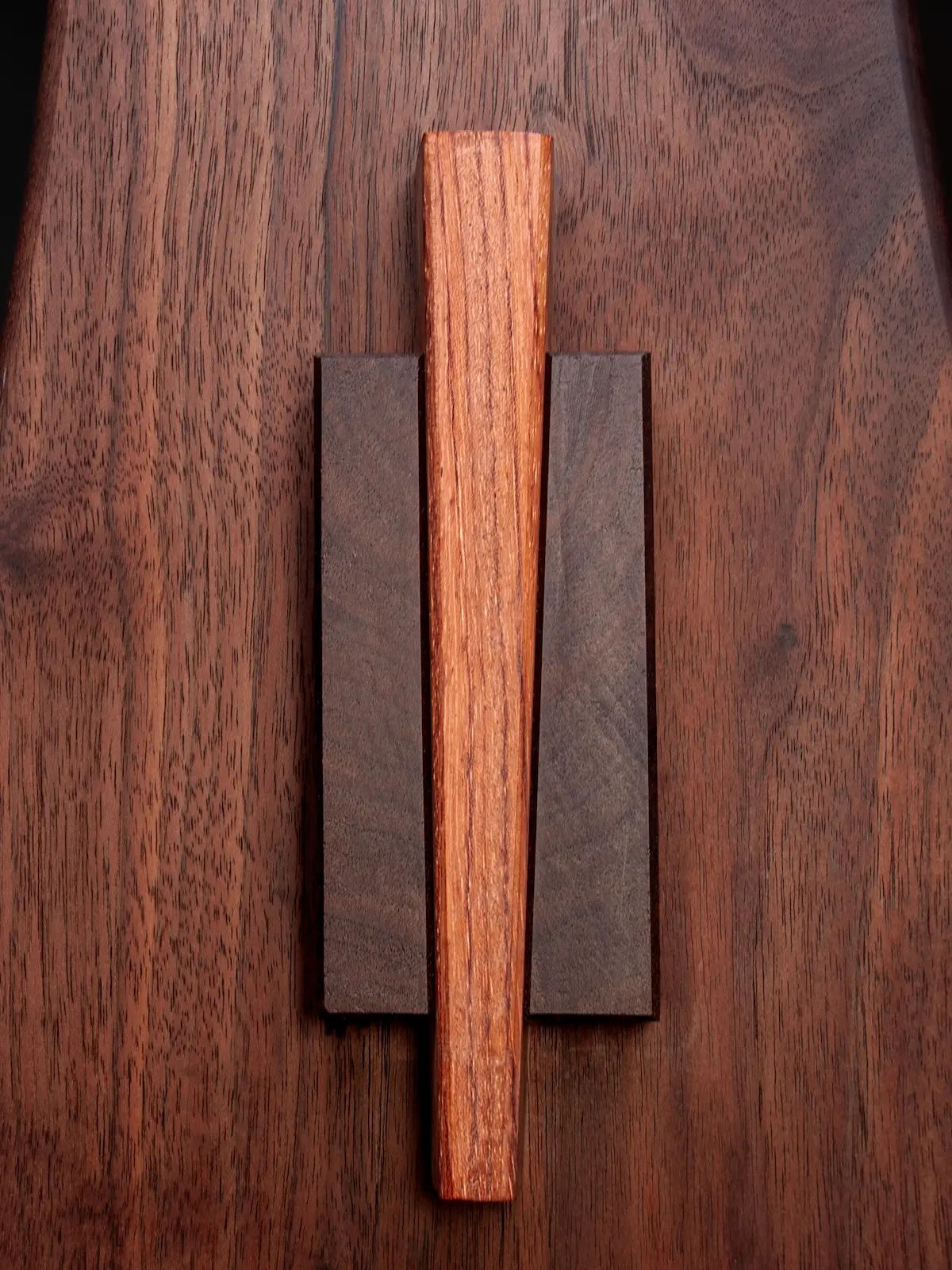
The most demanding work on this table came from the joint between the walnut stretcher and the trestle legs. Each end of the stretcher passes through a mortise in the leg. A removable bubinga key engages precisely fitted, tapered surfaces on the exposed through-tenon and draws the stretcher tight against the leg.
The design takes inspiration from George Nakashima’s exposed joinery. It combines elements of a dovetail tusk tenon and an open tapered sliding dovetail key. The dovetail-like geometry matters: this is more than a straight wedge driven into a rectangular slot. The angles and mating faces must work together as the key advances and tightens the joint.
Cutting those surfaces into the stretcher left no room for error. If the taper or angle was wrong, the key could bind before the stretcher seated, or slide home without drawing the joint tight. Getting the geometry right required exact layout and patient fitting, particularly where the bubinga key meets the cut surfaces of the walnut.
The connection remains mechanical and removable. With the keys withdrawn, the table breaks down into four major components: two leg assemblies, the stretcher, and the tabletop. That is the practical advantage of the Nakashima-inspired dovetail tusk-tenon construction: the stretcher locks securely in use, yet the table can come apart when it needs to move.
05/THE FINISH
Satin protection. Walnut still looks like walnut.
Natural Danish oil brings out the walnut’s rich color and grain. For long-term protection, M.L. Campbell Krystal conversion varnish provides the durability a dining table needs without leaving a thick, plastic-looking finish.
The satin sheen keeps reflections subdued while allowing the walnut’s natural color variations and grain patterns to remain visible. The result is a surface that looks and feels like wood, with the protection needed for everyday use.
THE BUILD / ON VIDEO
Watch the walnut trestle table take shape
The full-build video follows the table from shaping and joinery through the inlays and final assembly. For a closer look at individual stages, the five-part YouTube playlist covers the work in more detail.
CUSTOM FURNITURE / MAJESTY WOODWORKS
A table designed for your space
Every custom table begins with its own dimensions, wood, and design priorities. Browse more completed work in the custom furniture portfolio.