

Bigleaf Maple
Acer macrophyllum
Bigleaf Maple wood is a figure-rich hardwood prized for its deep ripples and tight stripes, frequently selected for bookmatched guitar tops and specialty instrument builds.
Janka
Price Tier
Dent Risk

Overview
Bigleaf Maple is the Pacific Northwest’s primary maple export, acting as the West Coast cousin to the Eastern maples. While it maintains the classic pale color of the species, it is significantly softer than Hard Maple, sitting closer to Silver or Red Maple on the Janka scale. This makes it friendlier under hand tools, though it is much more prone to denting and “fuzzing” if your tooling isn’t razor-sharp.
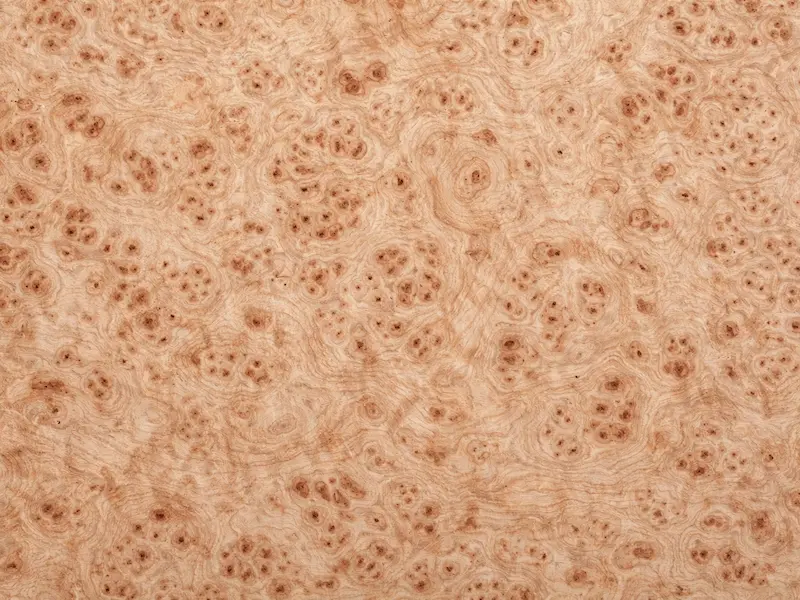
Because Bigleaf grows in a temperate rainforest climate, it can produce massive logs with spectacular, high-contrast figure. However, these figured pieces are notorious for grain tear-out; your workflow and grain direction awareness matter far more than the species label here. If you are looking for that signature “Pacific Coast” look with the highest probability of deep ripple and quilt, Bigleaf is where that story starts. It frequently produces the heavy Quilted, Burl, and Curly patterns that are mandatory for bookmatched guitar tops and high-end architectural focal points.
Key takeaways
- Figure potential is high;
- Softer than hard maple;
- Tearout on wild grain.

At a Glance
Hardness & Heft
Color & Figure
Color: Pinkish brown, creamy-white sapwood
Stability & Movement
Drying: Dry carefully to protect figure; avoid quickly drying
Workability
Plays nice with
- High figure potential
- Wood dyes
- Accepts Clear Finish
Fights you on
- Blotchy Staining
- Soft Surface Dents
- Movement When Wet
Finishing
- Surface Prep: Scraper, 150-220
- Blotch Risk: High
- Pores: Tight
Best Uses
Great for
- Figured panels
- Instrument tops
- Modern furniture
Avoid for
- Heavy wear floors
- No-prep staining
- Rough outdoor use
Where it comes from
Pacific Northwest, USA and Canada

Buying notes
- Sold As: Lumber, veneer, figured billets
- Look For: Even figure, minimal bark inclusions
What to Watch Out For
- Tearout
- Occasional mineral streaks
- Small checks
Practical Alternatives
- Soft Maple
- Hard Maple
- Sycamore
Shop Notes / Deeper Dive
Like what you see?
While I occasionally work with some of these species, availability varies widely. If you’re researching woods for a custom project, feel free to reach out.
Reference Notes: Wood grain and color can vary significantly within a species depending on growing conditions, age, and cut orientation. Images on this page are provided as general reference examples and may not represent every possible variation of the species. Geographic distribution maps illustrate typical native or commonly cultivated ranges and may not reflect every region where the species occurs today.
Additional technical data and botanical information may be referenced from sources such as the USDA Forest Products Laboratory Wood Handbook.