

Southern Yellow Pine
Pinus spp. (e.g., Pinus taeda, P. elliottii)
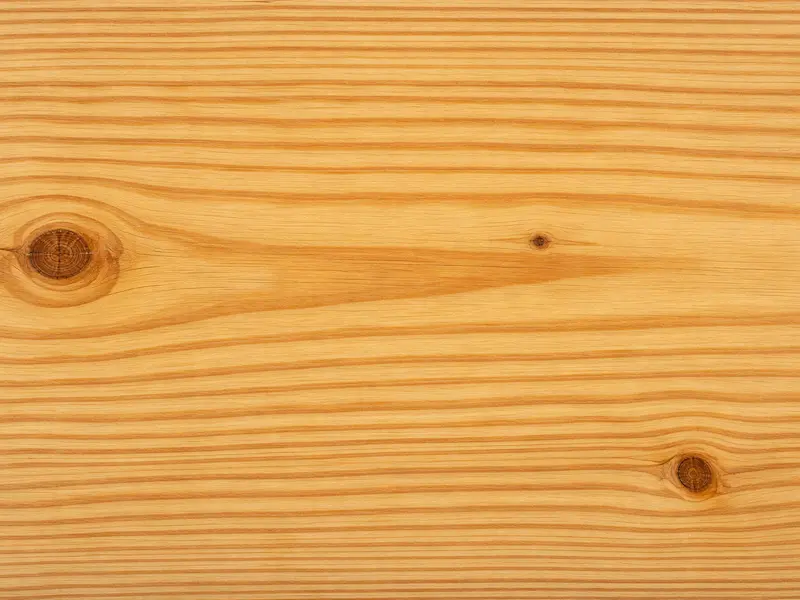
Southern Yellow Pine is a resin-rich softwood with bold growth rings, commonly used for framing, flooring, and general construction.
Janka
Price Tier
Dent Risk
Overview
Southern Yellow Pine is a workhorse softwood known for high resin content and better strength than most ‘white’ pines. It is common in construction, but clear stock can be excellent for furniture, benches, and painted built-ins. The downside is movement and pitch bleed if you finish too soon or trap resin. If you treat it like a real wood, not disposable framing, it can perform way above its price point.
Key takeaways
- Strong for a softwood;
- Resin and knots are real;
- Great painted or rustic looks.
At a Glance
Hardness & Heft
Color & Figure
Color: Yellow/Tan
Stability & Movement
Drying: Let it acclimate; resin can migrate
Workability
Plays nice with
- Strong for a softwood
- Construction Framing
- Readily Available
Fights you on
- Pitch Pockets
- Warping while Drying
- Hard Latewood Bands
Finishing
- Surface Prep: 120-150-180
- Blotch Risk: High
- Pores: Tight (softwood)
Best Uses
Great for
- Framing
- Workbenches
- Painted built-ins
Avoid for
- Fine clear finishes
- Wide tabletops
- Hot environments
Where it comes from
Southeastern USA

Buying notes
- Sold As: Dimensional lumber, timbers, treated boards
- Look For: Tight growth rings, minimal pitch on show faces
What to Watch Out For
- Knots
- Pitch pockets
- Twist
Practical Alternatives
- Douglas Fir
- Wastern White Pine
- Spruce
Shop Notes / Deeper Dive
Like what you see?
While I occasionally work with some of these species, availability varies widely. If you’re researching woods for a custom project, feel free to reach out.
Reference Notes: Wood grain and color can vary significantly within a species depending on growing conditions, age, and cut orientation. Images on this page are provided as general reference examples and may not represent every possible variation of the species. Geographic distribution maps illustrate typical native or commonly cultivated ranges and may not reflect every region where the species occurs today.
Additional technical data and botanical information may be referenced from sources such as the USDA Forest Products Laboratory Wood Handbook.