
When it comes to building custom furniture, few materials offer the richness, warmth, and character of walnut. I’ve been working with walnut for years now, and it’s hands-down one of my favorite hardwoods — not just for how it looks, but for how it behaves in the shop. From smooth grain to bold contrast, it brings both beauty and versatility to any project. In this post, I’ll walk you through why I keep reaching for walnut, how I use it, and why it might just be the perfect choice for your next custom piece.
Black Walnut is one of the most versatile hardwoods used in custom furniture because it balances workability, durability, and rich natural color better than almost any domestic species.
You could say I came to walnut the way some people come to coffee — slowly at first, then all in.
I grew up watching my dad work with oak. It was the classic choice for his generation, and I respected it. In fact, the first home I ever bought had oak floors buried under carpet. I ripped it all out and refinished every board. But the more time I spent around oak, the more I found myself craving something different. Something darker. Something richer. That is when I began working with walnut.
The first time I used walnut, everything changed. It was easy to work with, forgiving on the tools, and it finished beautifully no matter what I threw at it. And the smell? That smoky-sweet aroma reminded me of Christmases as a kid at the tree farm, where walnut logs crackled in the fireplace. It hit me in the nostalgia — hard.
Rarely by name. Most clients don’t know the difference between walnut and wenge — they just want “dark.” When someone asks for the deepest, richest tone I can work with, walnut is where I steer them. It has the upscale look they’re after without jumping into premium import-wood price tags like cocobolo or Macassar ebony.
That said, I’ve only had one client ever ask for oak — and it was sentimental. The piece was a humidor for a client’s father, and oak just meant something to him. Otherwise, I prefer working with walnut all day.
I’ve used walnut in everything from luxury humidors to heirloom desks. Some notable examples include:
Luxury Handcrafted Vanity Desk — an elegant piece where walnut stole the show.
Bastogne Walnut Step Stool — rich, durable, and just plain classy.
Minimalist Walnut Nightstand — sleek lines meet warm tones.
If you’d like to see more stunning examples of how I work with walnut, visit my custom furniture portfolio.
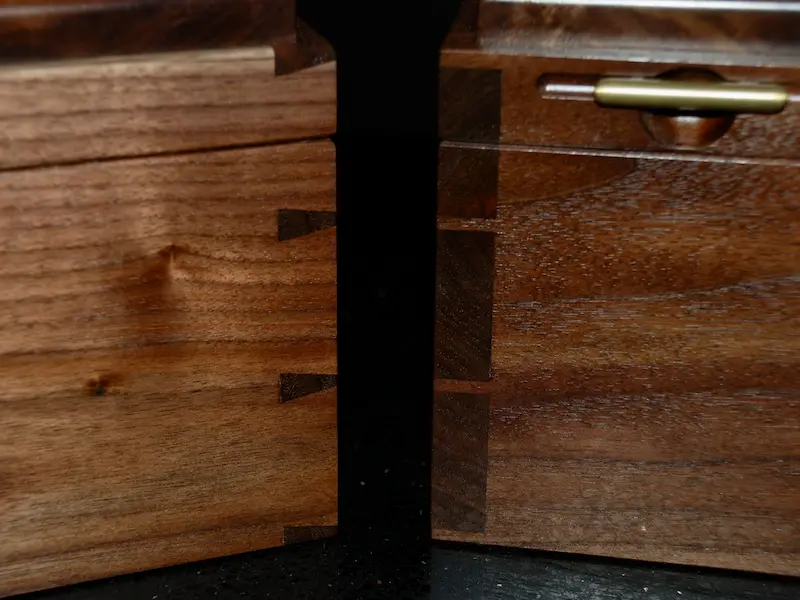
Working with walnut has its quirks (and charms) too. One of the quirks is its sapwood. I love the two-tone look. It breaks up the monotony and gives a piece depth. But not every client feels the same. Some see sapwood as a defect, not a feature.
That means more selective cutting, more waste, and sometimes having to glue up extra boards just to avoid that creamy edge. Still, if I can work it into the design, I do. It’s one of those things that, when done right, turns a good piece into a great one.


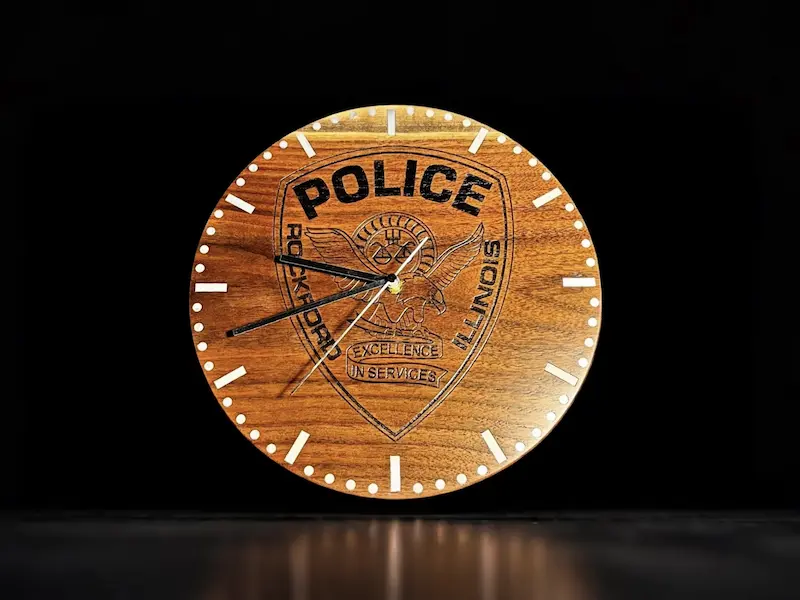
Walnut behaves beautifully most of the time, but figured walnut is another story. It can tear out easily, especially in the grain-swirl zones. That means frequent sharpening, careful tool angles, and sometimes even breaking out the card scraper for those final passes.
But the reward? It finishes like a dream — oil, lacquer, wax… it all sinks in and brings the wood to life.


Working with walnut is usually a dream — but every now and then, it tries to kill your spirit.
Some boards show up twisted, bowed, full of knots, or so wildly figured they might as well come with a warning label. I’ve picked up slabs that looked like potato chips. One 8/4 slab in particular was so warped and cracked that I only bought it because my supplier gave me a deal I couldn’t pass up. He was going to use it for firewood. You know what they say — “One mans trash is another mans treasure.”
What happened next? About 47 passes through the planer, some serious epoxy wizardry, and a few strategically placed curly maple bowties. After all that, the slab now sits at a proud 7/8″ thick — a shadow of its former self, but far more charming. Wild grain, live edge, sapwood, and a crystal-clear epoxy void… it’s downright gnarly in the best way. That, in fact, is one of the most rewarding things about working with walnut.
And what will it become? A one-of-a-kind end table for a very exclusive client. I’ve been building furniture for this particular client for years. Still waiting on that deposit, by the way — and I’ve been trying to get her to sign off on the leg design for quite some time now. But she’s not budging.
Apparently, she “called dibs.” I must’ve missed that clause in my contract law class.
It’s weird… this client refers to me as “hubby,” yells “BABE!!” from across the planet when she needs something, and only calls me “Chris” when I’ve done something wrong. But any married man knows that “dibs” is basically a binding agreement. She’ll probably sucker me into free delivery too.


When working with walnut, even the most unruly board can become a focal point — if you’re willing to put in the work.


One thing clients rarely expect is how different a figured walnut board can look just by changing your perspective. A flat surface might seem tame from one angle, but tilt it and boom — it’s alive.


That’s part of the magic. And it’s why no two pieces ever feel the same, even if they come from the same log.
Walnut is the ultimate team player. When I work with walnut, I often pair it with lighter woods like maple or cherry to highlight contrast in joinery. Especially when hand-cut dovetails are involved — maple pins against walnut tails (and vice versa) just scream craftsmanship.
And when clients give me free rein, I’ll often work in accents or inlays to really let walnut shine.

Maple has its place — it’s clean, modern, and “naked” looking. But walnut? Walnut feels dressed up even in a t-shirt. There’s a timeless, upscale look to it that just doesn’t go out of style.
It hides wear well, too. Small dings, bumps, and age marks seem to disappear into its grain. It wears its years with dignity — and let’s be honest, that’s more than we can say about most things in your living room.
If you want a classic, luxurious look that’s both versatile and bold — working with walnut will give you just that. Whether you want a minimal, modern silhouette or an ornate statement piece, walnut adapts beautifully. It’s one of those rare materials that never looks out of place, no matter the context.
Someday, I want to build a functional art piece that pushes my limits. Half furniture, half sculpture. Something that incorporates 7–10 (or more) different types of traditional joinery, bent lamination for dramatic curves, and a mix of aluminum or copper inlays.
Oh, and I’ll be working with walnut, of course. There’s no other wood I’d trust to pull off something that ambitious and expressive.
There’s a reason I keep coming back to walnut. It’s not just how it looks — though that certainly doesn’t hurt. But how it feels to work with, how it finishes, how it holds up over time. It’s the way a piece of walnut furniture can shift from practical to poetic with just a little shaping and care.
If you’re considering a custom piece and want something that doesn’t just look nice — but tells a story — then let’s talk. Whether it’s subtle or striking, walnut will meet you wherever you are.
Walnut is one of my most requested materials for clients ordering custom furniture in Rockford. So, let’s turn that hunch into something beautiful. Whether you’ve got a plan or just know you want a piece that turns heads, drop me a line — I’ll help you create something truly one-of-a-kind.

Comments (1)
This platform has seriously improved my leisure time because everything works perfectly on my phone without any lag or crashes. I really appreciate how transparent they are about terms and conditions and how fast the support staff handles my inquiries. It is rare to find a site that balances fun with such reliable service.